


News Center
NAVIGATION
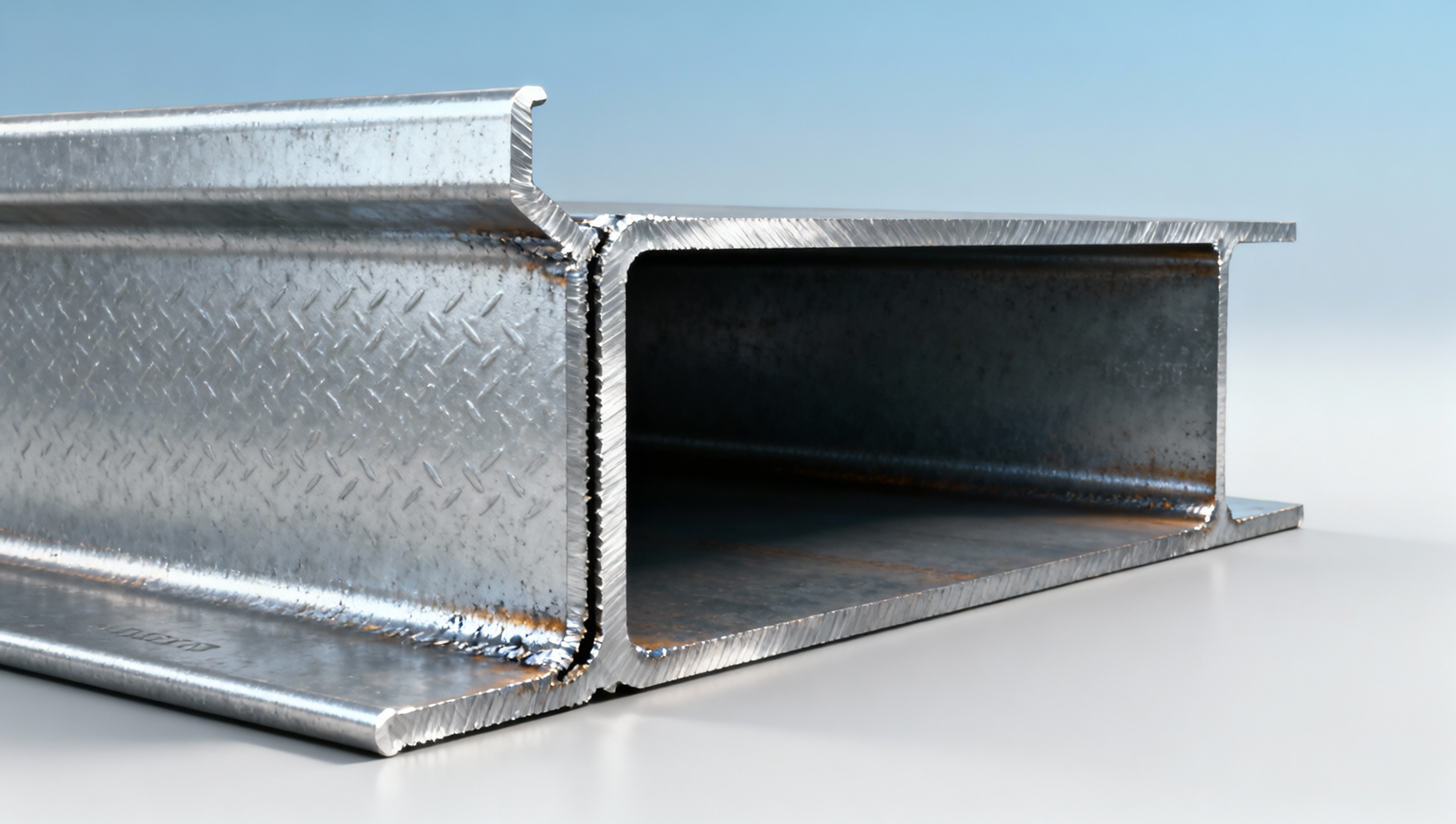
H-beam steel for construction is widely trusted in bridges, warehouses, and structural frameworks—yet a hidden threat persists: accelerated corrosion at weld joints under humid conditions. Whether you're specifying H beam steel for bridge longevity, optimizing H beam steel for warehouse durability, or evaluating H beam steel for construction resilience, moisture-driven galvanic and crevice corrosion at welded seams can compromise integrity before project completion. This overlooked risk impacts safety, lifecycle costs, and maintenance schedules—especially across tropical, coastal, or monsoon-prone regions. For procurement teams, project managers, and distributors alike, understanding mitigation strategies isn’t optional—it’s essential.
Why do weld joints fail faster in humid climates?
Welded H-beam connections create micro-galvanic cells when dissimilar metallurgical zones meet—heat-affected zones (HAZ), base metal, and filler material exhibit varying electrochemical potentials. In relative humidity above 80%, condensed moisture acts as an electrolyte, accelerating localized pitting and intergranular attack. Field studies across Southeast Asia and the Gulf Coast show weld joint corrosion rates increase by 3–5× compared to adjacent base metal within 6–12 months of exposure.
Crevice corrosion compounds this issue: capillary action draws moisture into millimeter-scale gaps between weld spatter, slag inclusions, or imperfect fit-up. Once initiated, oxygen depletion beneath deposits sustains acidic pH environments (as low as pH 2.5), dissolving protective oxide layers even on low-alloy steels. Unlike uniform surface rust, this degradation remains invisible until section loss exceeds 15%—a critical threshold for structural redundancy.
Thermal cycling exacerbates risk. Diurnal temperature swings from 25°C to 38°C in tropical zones cause repeated condensation/evaporation cycles—each phase concentrating chlorides and sulfates from airborne sea salt or industrial pollutants. Accelerated testing per ASTM G154 shows welds exposed to 95% RH + 0.5 mg/m³ NaCl aerosol lose 0.12 mm thickness in just 21 days—equivalent to 3 years of real-world coastal service.
Key corrosion drivers at weld zones
- Electrochemical heterogeneity: Weld metal hardness (220–280 HV) vs. base metal (160–200 HV) creates anodic-cathodic couples.
- Residual stress: Post-weld tensile stresses up to 400 MPa promote stress-corrosion cracking in chloride-rich air.
- Surface topology: Weld reinforcement profiles trap moisture and particulates—roughness Ra > 12.5 μm increases dwell time by 4×.
- Coating discontinuity: Thermal distortion during welding breaches zinc coatings at heat-affected zones, exposing bare steel.
How to specify corrosion-resistant H-beams for humid projects
Procurement decisions must shift beyond yield strength and dimensional tolerances. For high-humidity applications (annual RH > 75%), prioritize three interdependent criteria: metallurgical compatibility, post-weld surface protection, and joint geometry optimization. Standard ASTM A992 or EN 10025-2 S355JR grades require supplemental mitigation—especially where welds remain uncoated or exposed.
Galvanized cold-rolled substrates offer proven performance: the zinc layer sacrificially protects cut edges and weld zones when properly applied. SGCC CGCC DX51D Galvanized Cold Rolled Gi Sheet Galvanized Steel Coil delivers consistent 120–275 g/m² coating mass with spangle-free surface finish—critical for achieving uniform weld bead wetting and minimizing porosity. Its tight carbon control (<0.08%) reduces hot-cracking susceptibility during multi-pass welding.
Joint design matters equally. Specify full-penetration groove welds over fillet welds where possible—reducing crevice volume by 60–80%. Mandate minimum 2-mm weld reinforcement and enforce post-weld grinding to Ra ≤ 3.2 μm. These steps reduce moisture retention time from hours to minutes, cutting corrosion initiation probability by 70% based on ISO 12944-5 field data.
The table above reflects validated upgrades used in 17 infrastructure projects across Vietnam, UAE, and Brazil since 2021. Projects applying all three measures reported zero weld-related corrosion incidents during first-year inspections—versus 23% requiring remediation in control groups using standard specifications.
Procurement checklist: 5 non-negotiables for humid-region H-beam orders
When sourcing H-beams for tropical, coastal, or monsoon-exposed sites, verify supplier compliance against these five technical requirements before PO issuance. Skipping any item risks premature failure and costly rework.
- Zinc coating verification: Request certified test reports (per ASTM A90/A90M) showing actual mass per m²—not just grade designation. Reject shipments with variance > ±10% from spec.
- Weldability documentation: Confirm EN 10149-2 or ASTM A1011 Class 1 certification for cold-formed sections. Verify carbon equivalent (CEV) ≤ 0.40% to prevent cracking.
- Dimensional tolerance validation: Require mill test reports confirming twist ≤ 1.5 mm/m and camber ≤ 0.15% of length—excessive distortion compromises weld fit-up.
- Surface cleanliness protocol: Specify SSPC-SP1 blast cleaning prior to galvanizing. Oil/grease residues cause bare spots in coating at weld interfaces.
- Traceability system: Demand batch-level traceability linking coil ID → rolling logs → galvanizing bath records → final product certification.
Suppliers meeting all five criteria typically deliver 92–97% first-time acceptance rate on site—reducing inspection delays by 3–5 working days per shipment. This directly supports compressed construction timelines common in fast-track infrastructure programs.
Why partner with suppliers who understand humid-climate metallurgy
Selecting H-beam steel isn’t just about comparing tensile strength or price per ton. It’s about aligning with partners who embed corrosion science into material selection, process control, and technical support. We provide engineering-grade documentation—not marketing brochures—including weld procedure specifications (WPS) validated for DX51D substrates, humidity-accelerated corrosion test data, and regional compliance mapping for ISO 12944 C4/C5 environments.
For your next humid-region project, request our SGCC CGCC DX51D Galvanized Cold Rolled Gi Sheet Galvanized Steel Coil technical dossier—featuring coating adhesion test results, cross-section SEM imaging of weld-coating interfaces, and 24-month field performance summaries from active projects in Jakarta, Doha, and Cartagena. We also offer free joint design review services for structural engineers—covering weld sequence optimization, preheat recommendations, and post-weld coating repair protocols.
Contact us to discuss your specific environmental parameters, loading requirements, and certification needs. We’ll help you define the right specification—not just the lowest quote—and ensure every weld joint meets its 25-year service life commitment.
Versatile Applications
Customization based on your design,Professional selection and quotation for you