


News Center
NAVIGATION
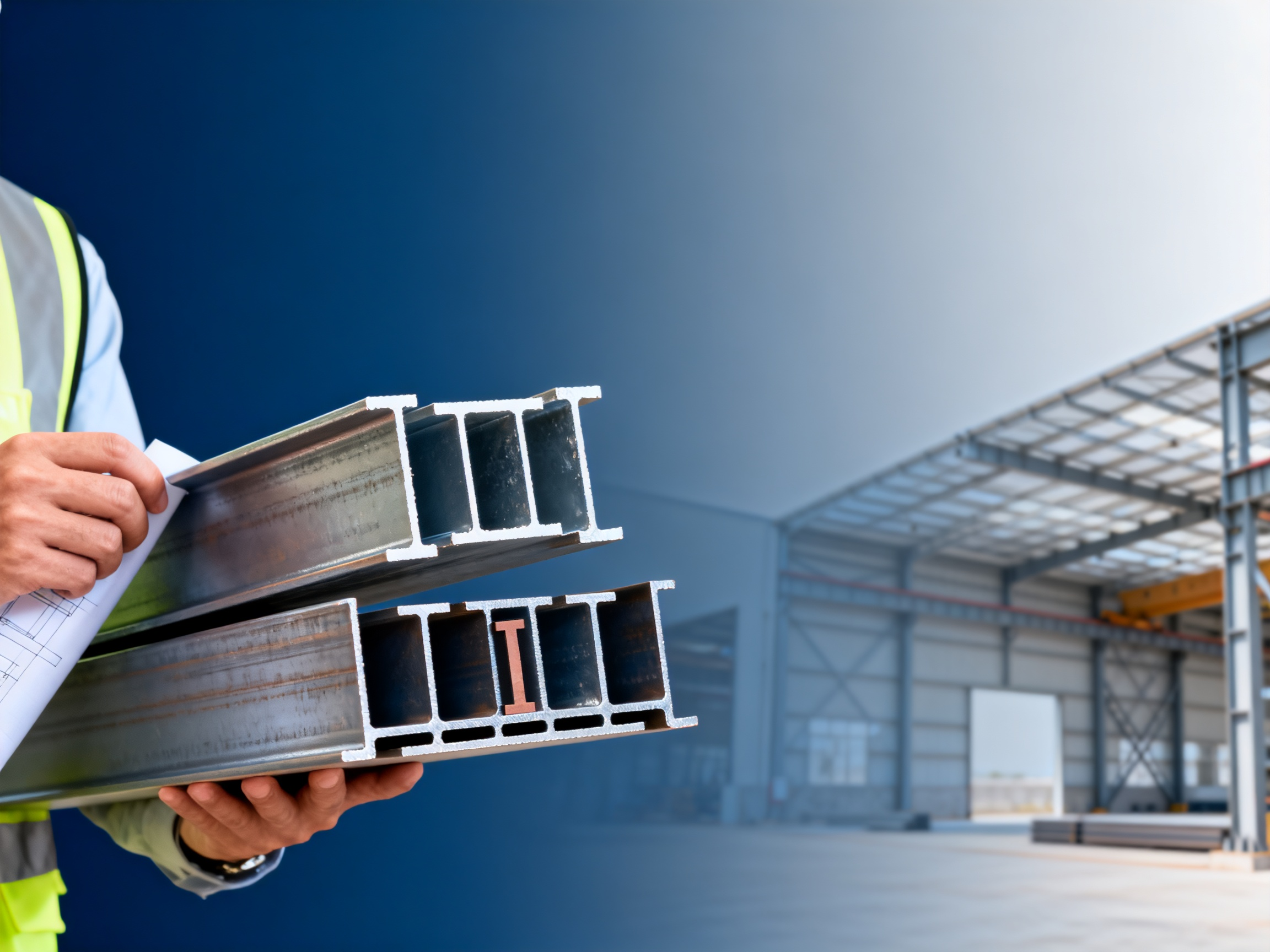
When constructing industrial structures, choosing between H beam steel and I beam is a critical decision that impacts durability, load-bearing capacity, and cost-efficiency. H beam steel, with its wider flanges and parallel surfaces, offers superior strength-to-weight ratio for heavy-duty applications. This article explores the key differences, advantages, and ideal use cases of H beam versus I beam to help project managers, engineers, and maintenance professionals make informed decisions for their structural projects.
Definition and Structural Characteristics
H beam steel, also known as wide flange beam, is characterized by its H-shaped cross-section with equal thickness in the web and flanges. The parallel inner and outer flange surfaces provide enhanced load distribution compared to I beams. According to ASTM A6 standards, H beams typically have a wider flange-to-web ratio (up to 2:1) than I beams, making them ideal for applications requiring superior lateral stability. The structural design allows H beam steel to withstand higher bending moments, particularly in multi-story buildings and bridge construction where uniform stress distribution is critical.
Technical Performance Comparison
When evaluating H beam steel versus I beam for industrial projects, several technical parameters must be considered. H beams demonstrate 15-20% greater moment of inertia (Ix) values for equivalent weights, translating to better resistance against deflection. Their web thickness averages 30% thicker than comparable I beams, reducing the risk of web buckling under concentrated loads. The table below highlights key performance differences:
Application Scenarios in Industrial Projects
H beam steel outperforms I beams in specific industrial applications due to its structural advantages. For warehouse construction, the wider flanges provide better support for mezzanine floors and heavy storage racks. In manufacturing plants, H beams are preferred for crane runway systems where consistent load-bearing across the flange width is essential. Petroleum refineries frequently specify H beam steel for pipe bridges due to its superior resistance to torsional stresses. Maintenance teams appreciate H beams for their easier weldability and reduced need for stiffener plates during retrofits.
Procurement Considerations for Project Managers
When sourcing H beam steel, project managers should evaluate material certifications against ASTM A992 or EN 10025 standards. Consider lead times - standard H beam sizes (W8-W14) typically have better availability than custom I beam profiles. For cost-sensitive projects, note that while H beam steel carries a 10-15% premium over I beams, the reduced need for secondary supports often results in 20-30% overall savings. Always verify mill test reports for yield strength (minimum 50 ksi for structural applications) and Charpy V-notch impact test results when specifying H beams for seismic zones.
FAQ: Addressing Common Project Concerns
Q: Can H beam steel replace I beams in existing structures?
A: Yes, but requires engineering analysis for load redistribution. The wider flanges may necessitate connection detail modifications.
Q: How does corrosion resistance compare between H and I beams?
A: Both use similar protective coatings, but H beam's thicker web provides longer service life in corrosive environments.
Q: What's the maximum span achievable with H beams?
A: Standard W36x135 H beams can span up to 60 feet without intermediate supports in typical loading conditions.
Why Choose Our H Beam Steel Solutions
Our mill-direct H beam steel inventory meets the most demanding project specifications with certified traceability. We maintain North America's largest stock of ASTM-compliant wide flange beams in sizes from W4 to W44, with same-day shipping available for urgent projects. Our technical team provides free load calculations and connection design support to ensure optimal H beam selection. Contact our structural specialists today for customized quotations and project-specific material recommendations.
Versatile Applications
Customization based on your design,Professional selection and quotation for you